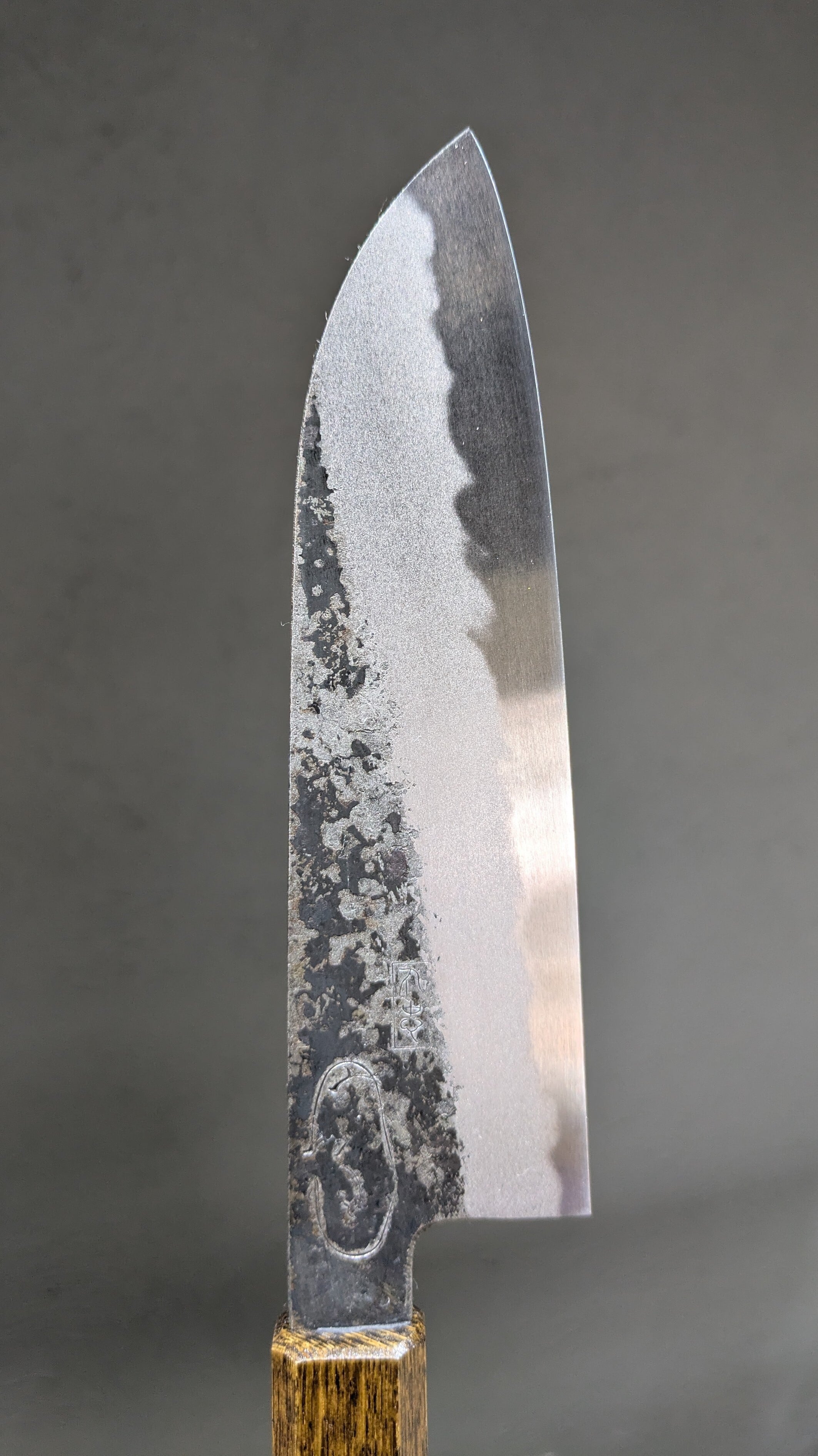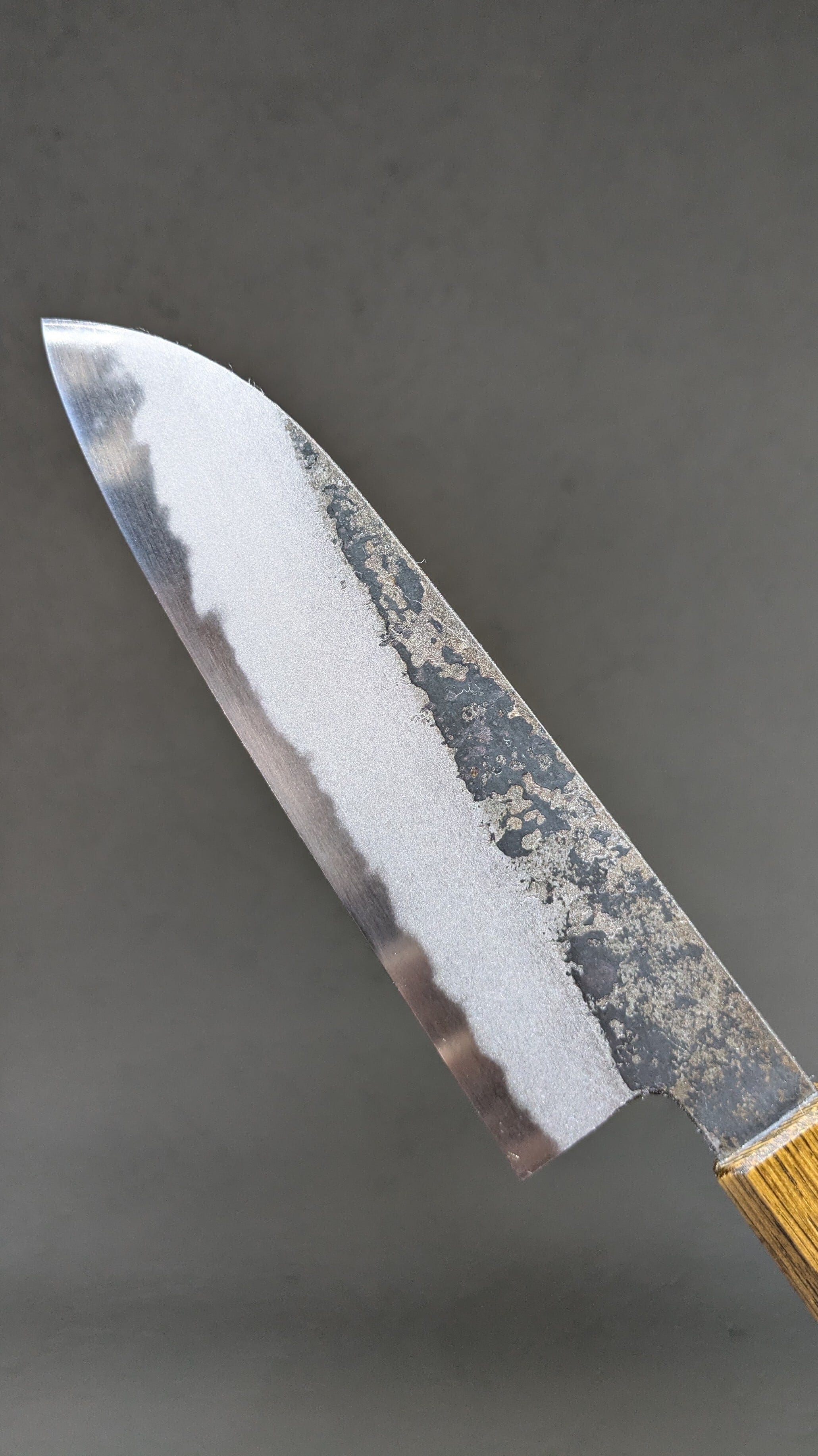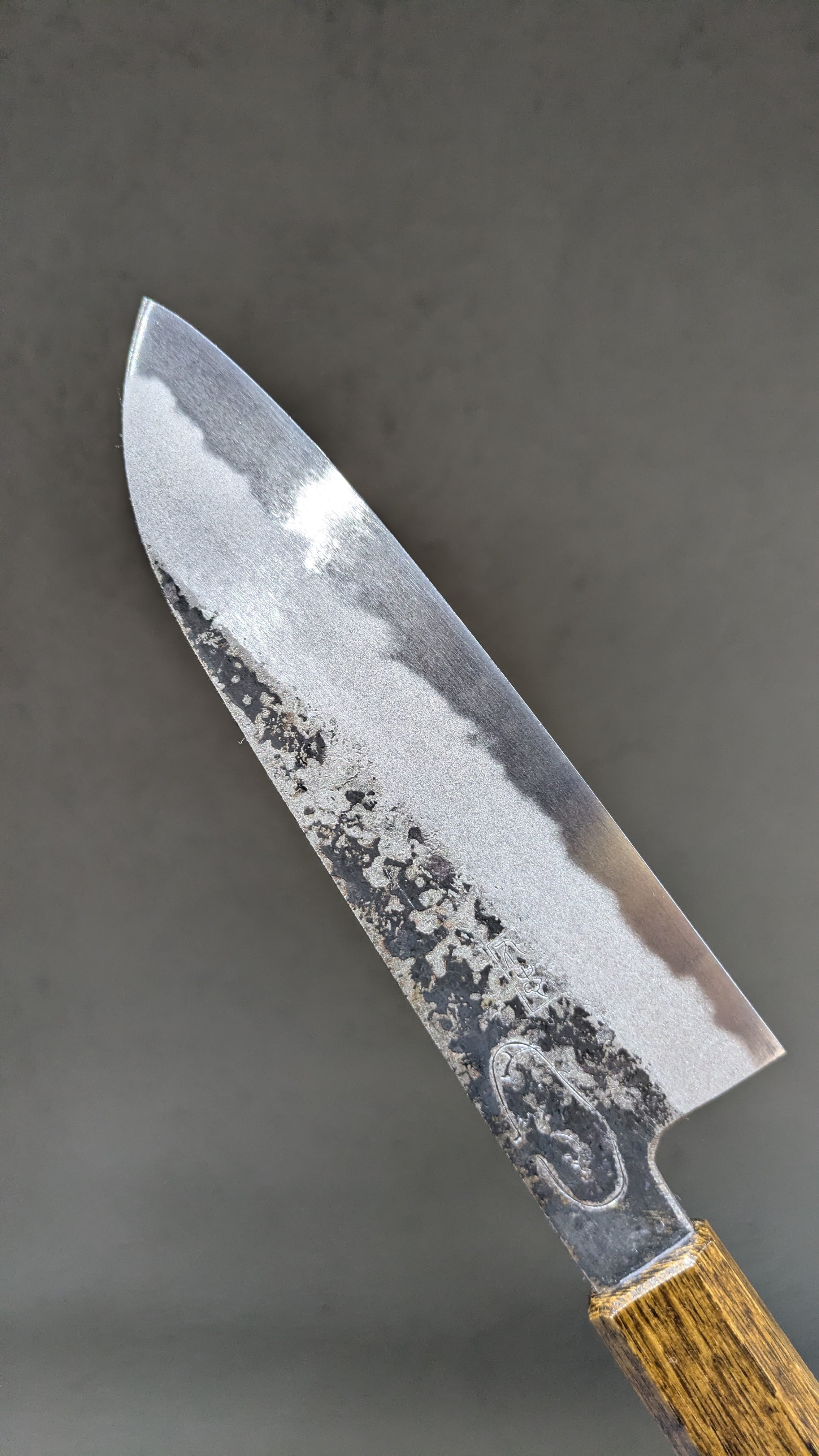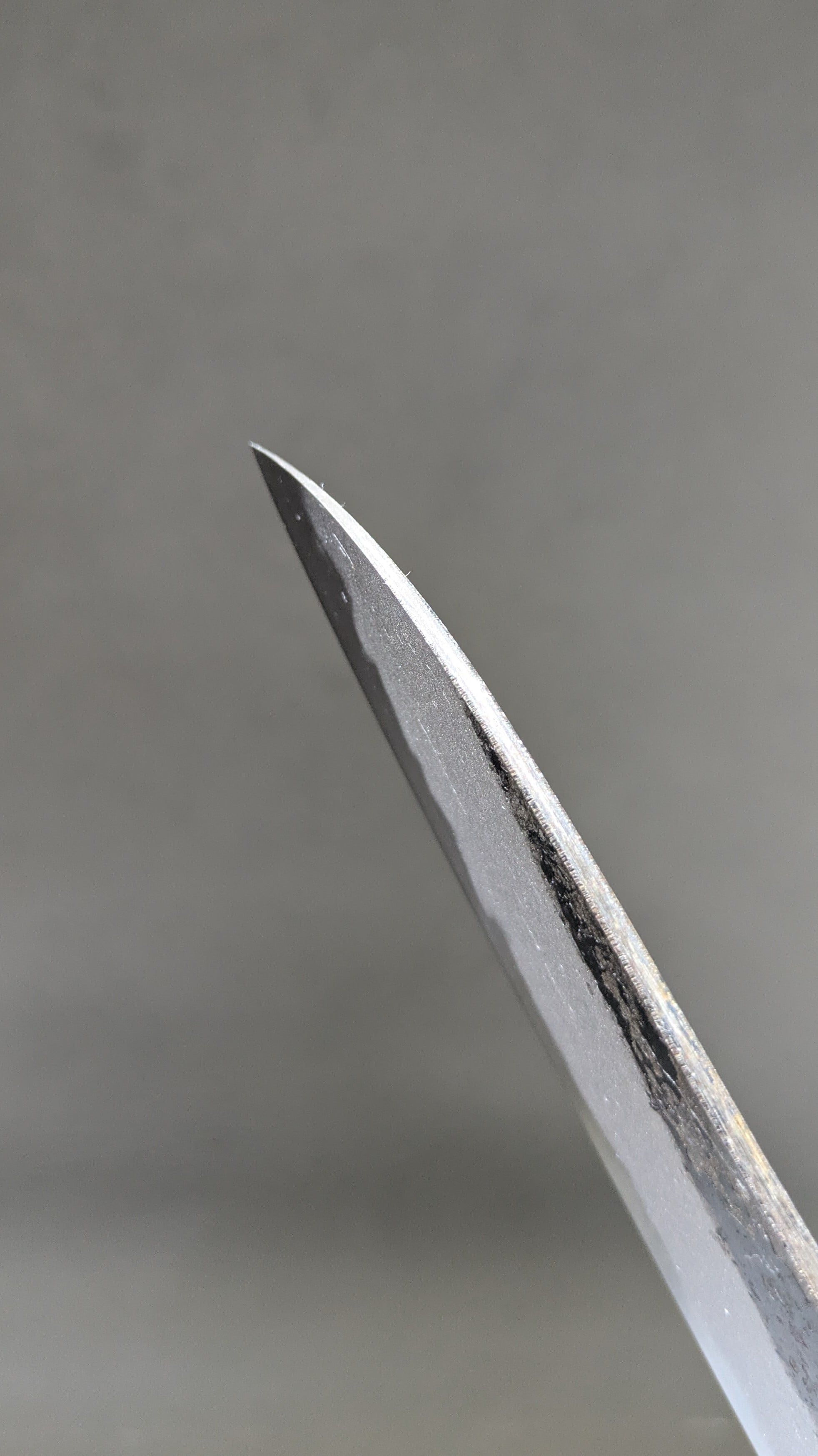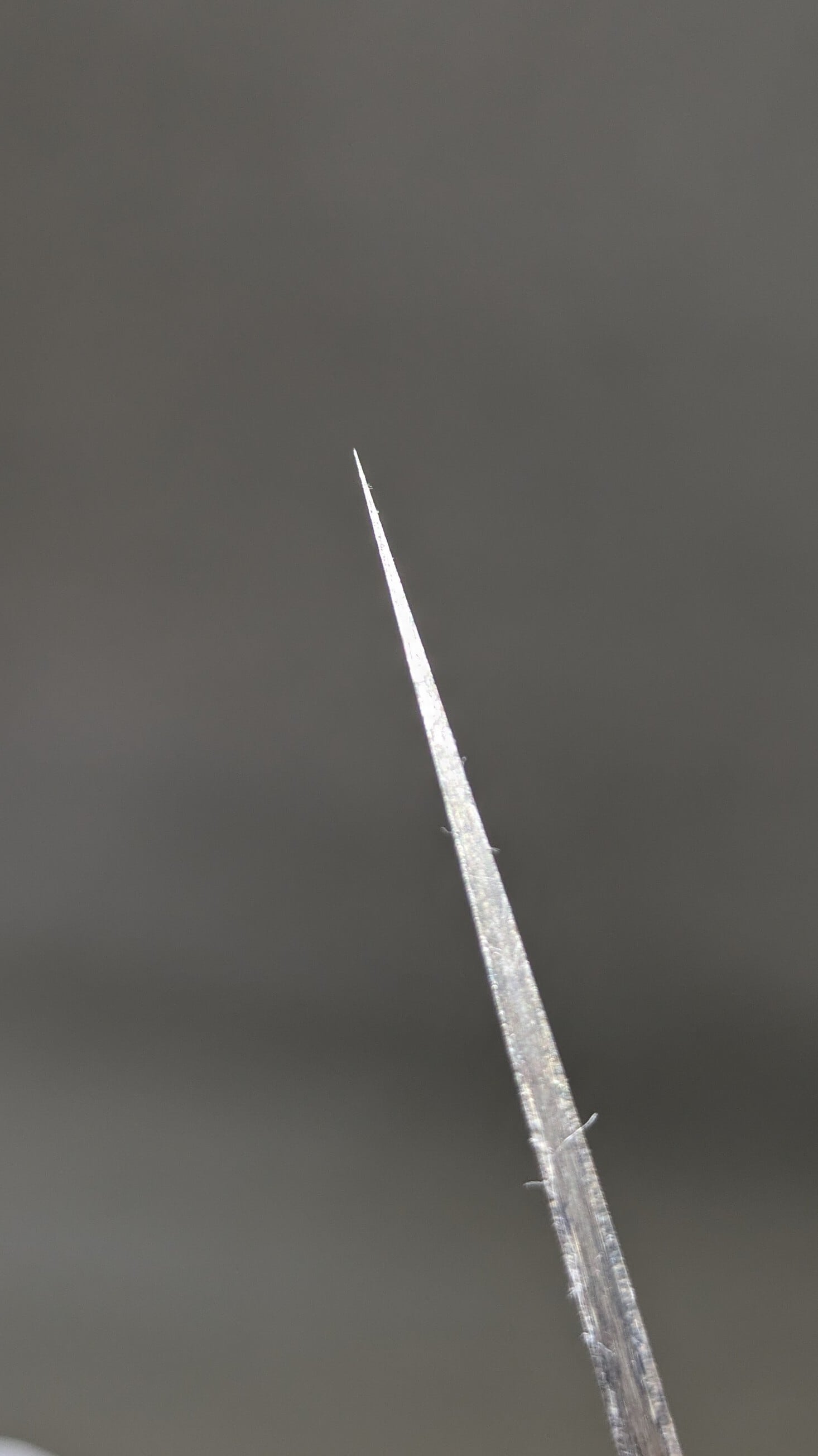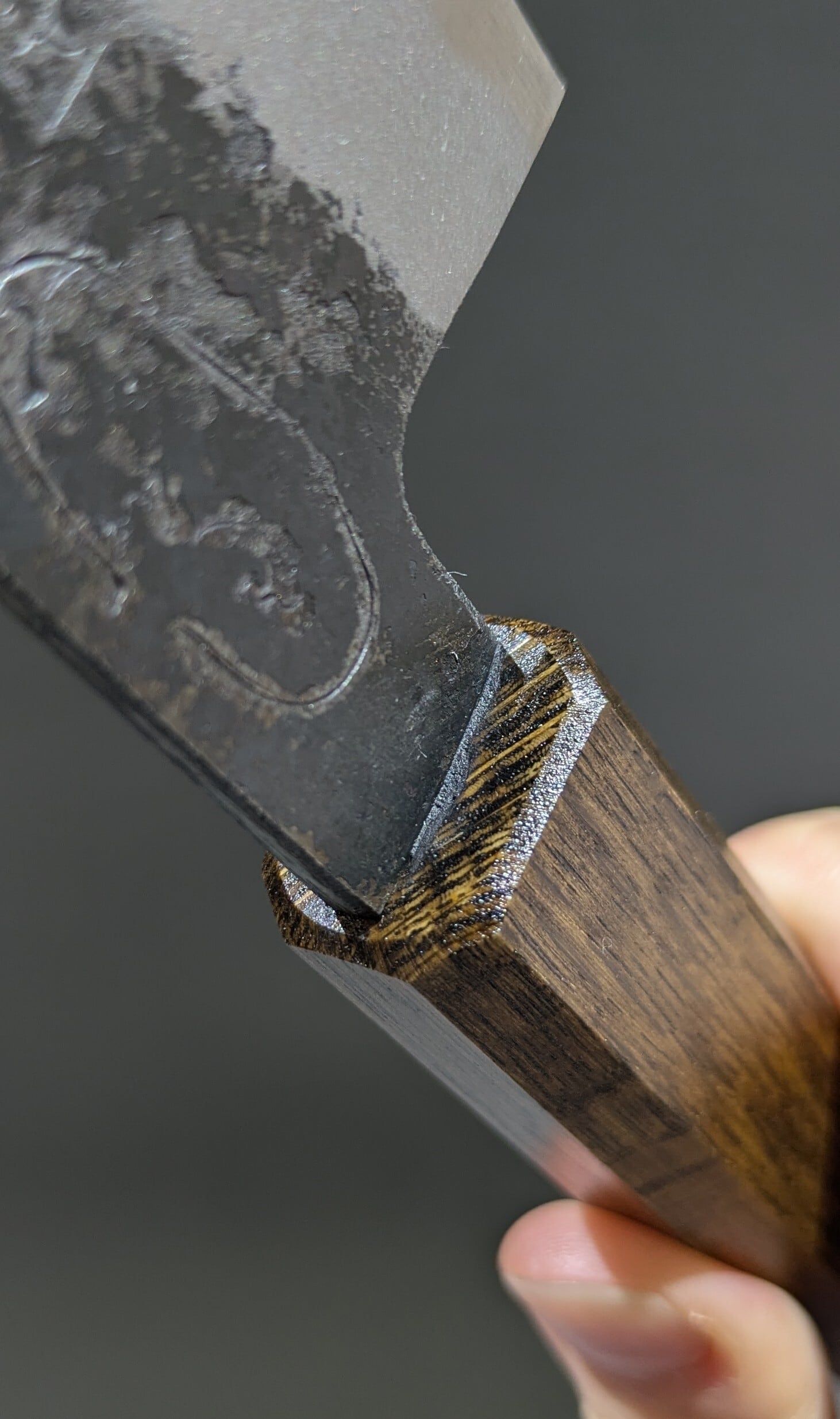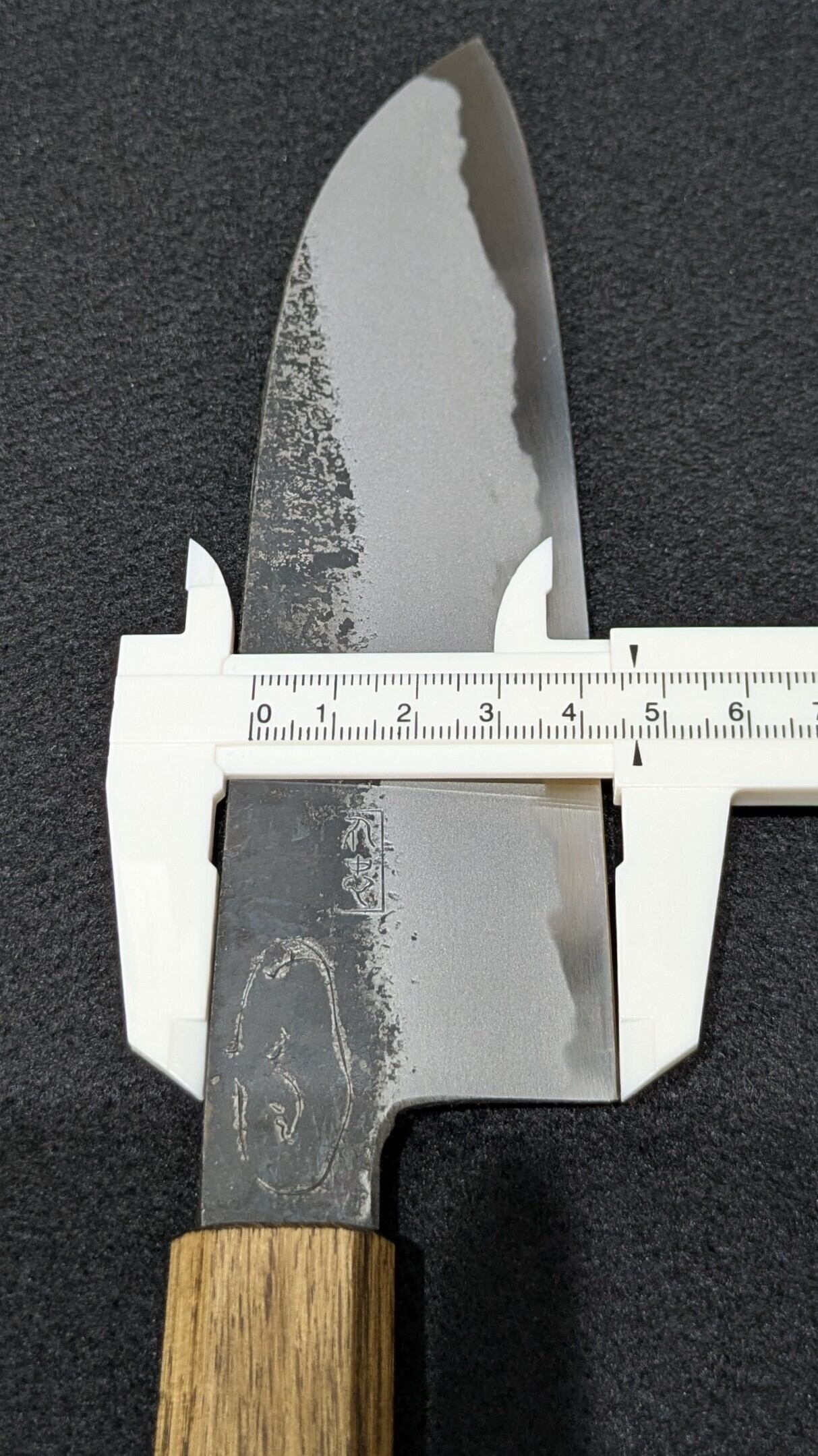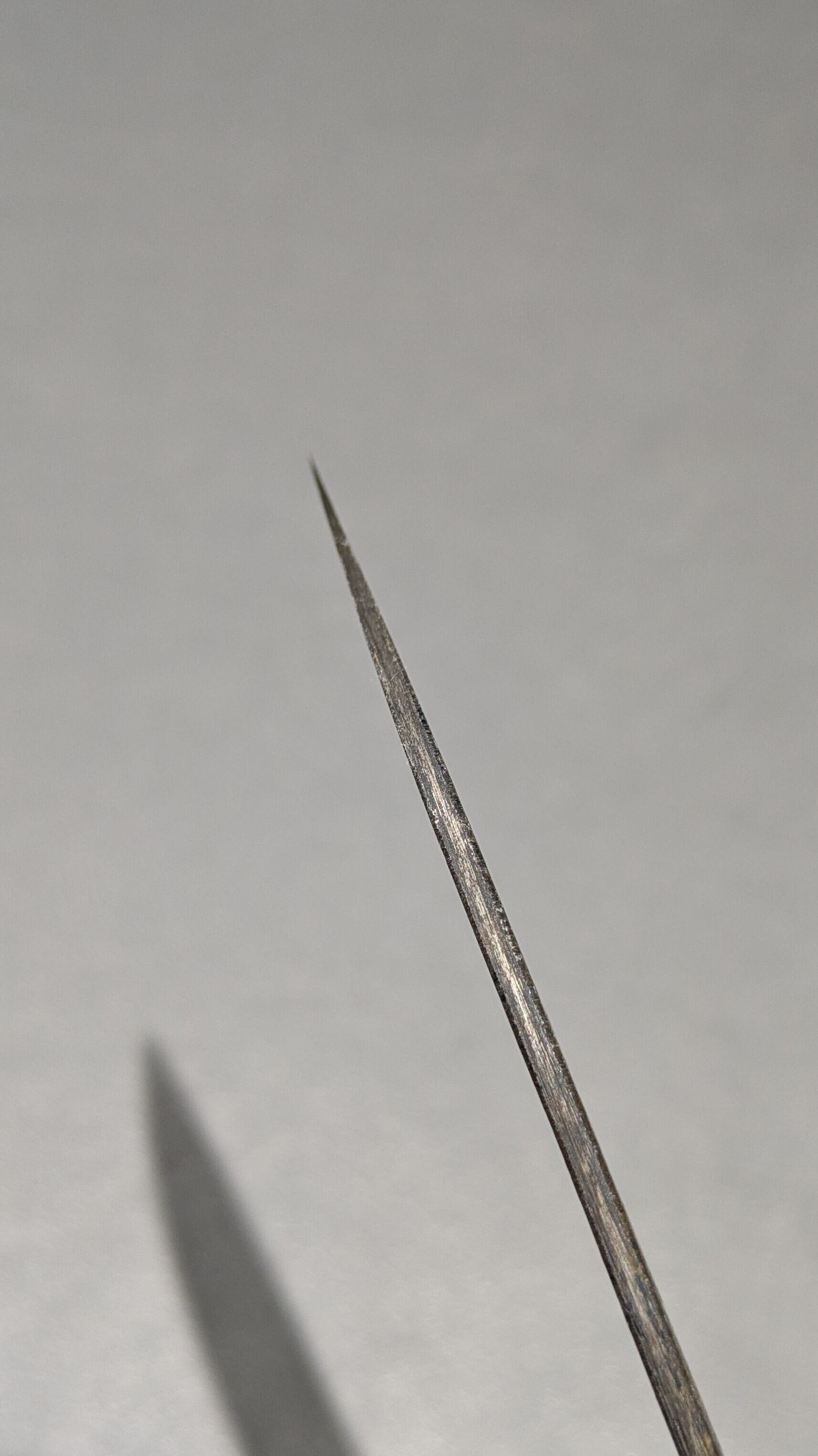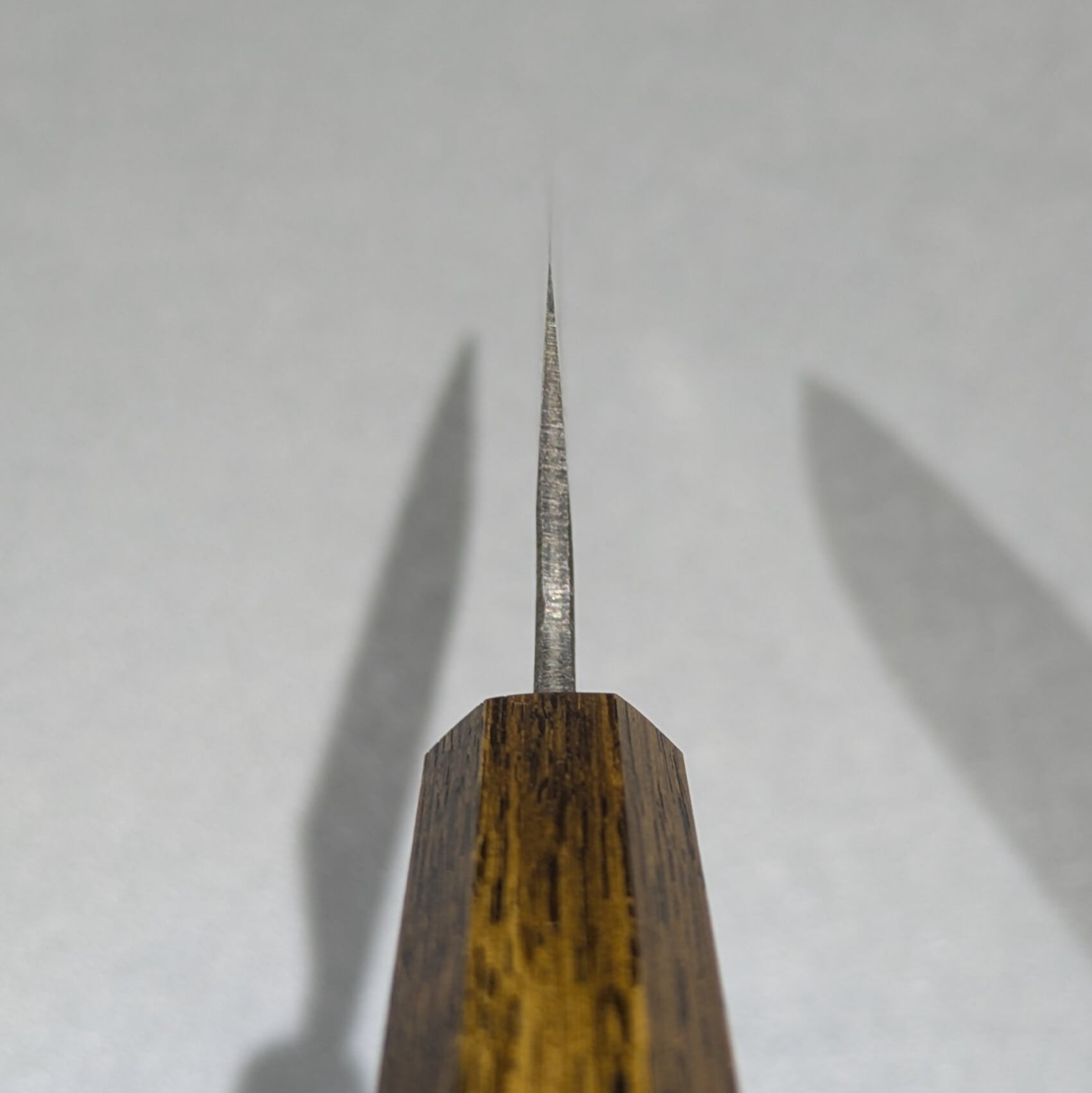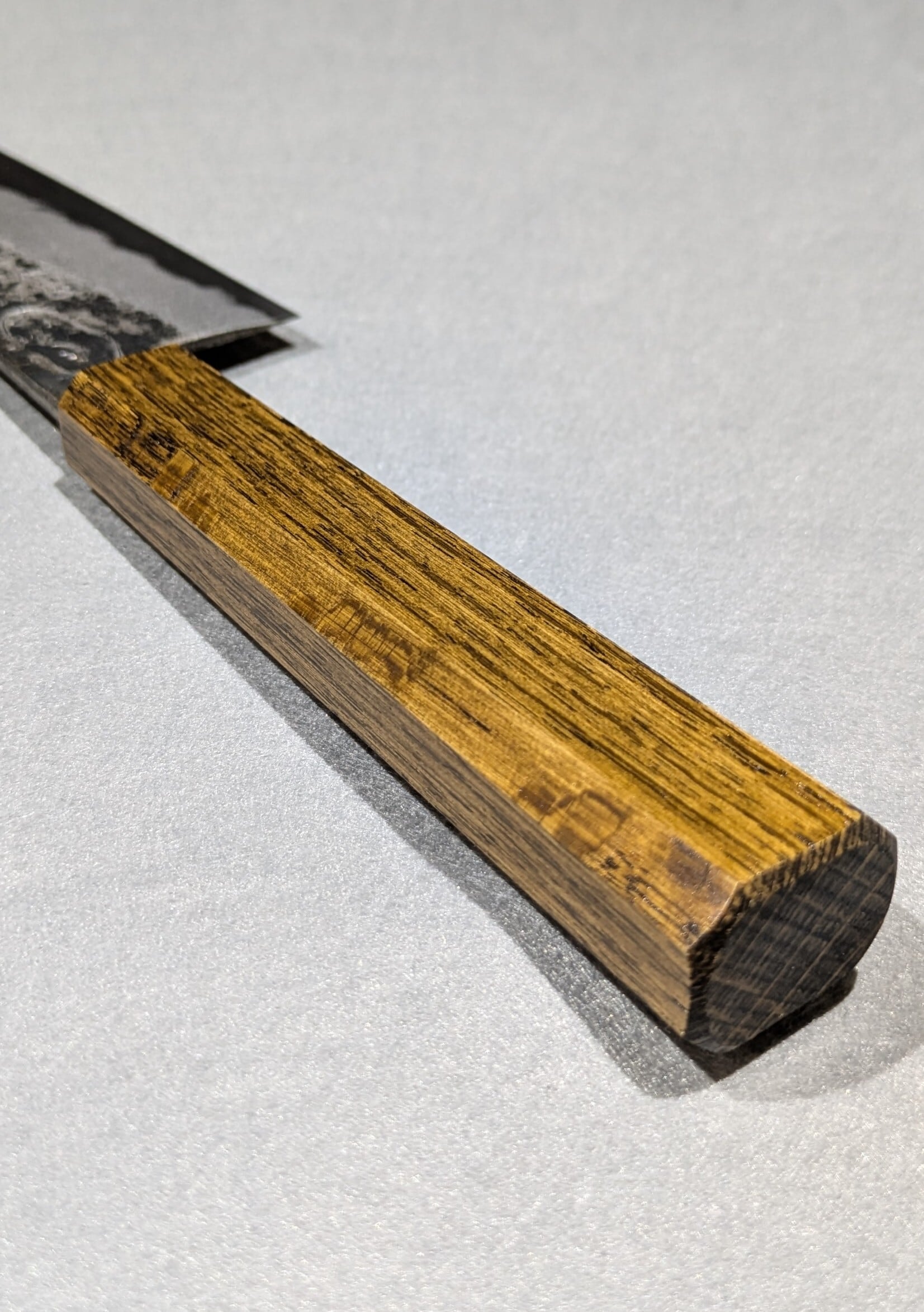







白二 黒打 三徳 6寸(White Steel #2 Kurouchi Santoku 180mm)
¥40,000($253.06)
International shipping available
★English explanations are provided at the bottom of the page.
●鍛冶:田中打刃物製作所
●鋼材:白二(炭素鋼)
日本の伝統的な高級刃物鋼材の一つで、純度の高い炭素鋼です。
切れ味と研ぎやすさのバランスが良く、初心者にもおすすめの包丁鋼材です。
錆びやすいという特徴があるため使用後にはしっかり手入れが必要ですが、適切に扱えば鋭い切れ味が長持ちします。
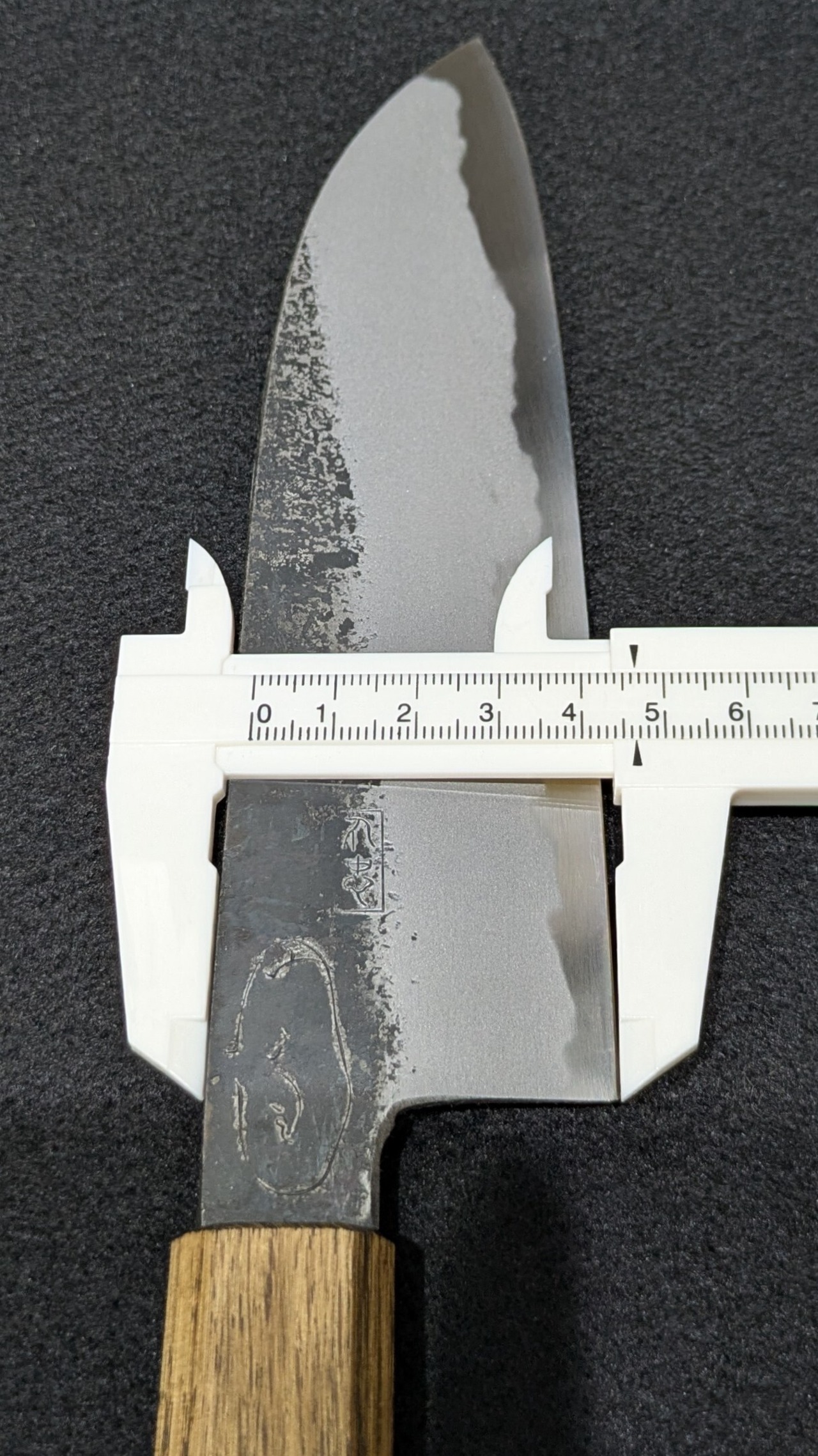
●刃渡り:6寸(約180mm、マチから切っ先まで)
●柄:樫(日本産)
※1丁1丁職人の手作業で製造している為、包丁の模様・波紋・色、柄の色・模様に個体差があります。
※ステンレス鋼よりも研ぎやすく、切れ味が長持ちします。また、錆びやすく変色しやすいです。
常に清潔にして乾いた布で拭いてください。
酸は錆を早めるため、酸性の食材を切った後はできるだけ早く包丁を水で洗い流し、水分を完全に拭き取ってください。
頻繁に使用する場合は油を塗る必要はありません。
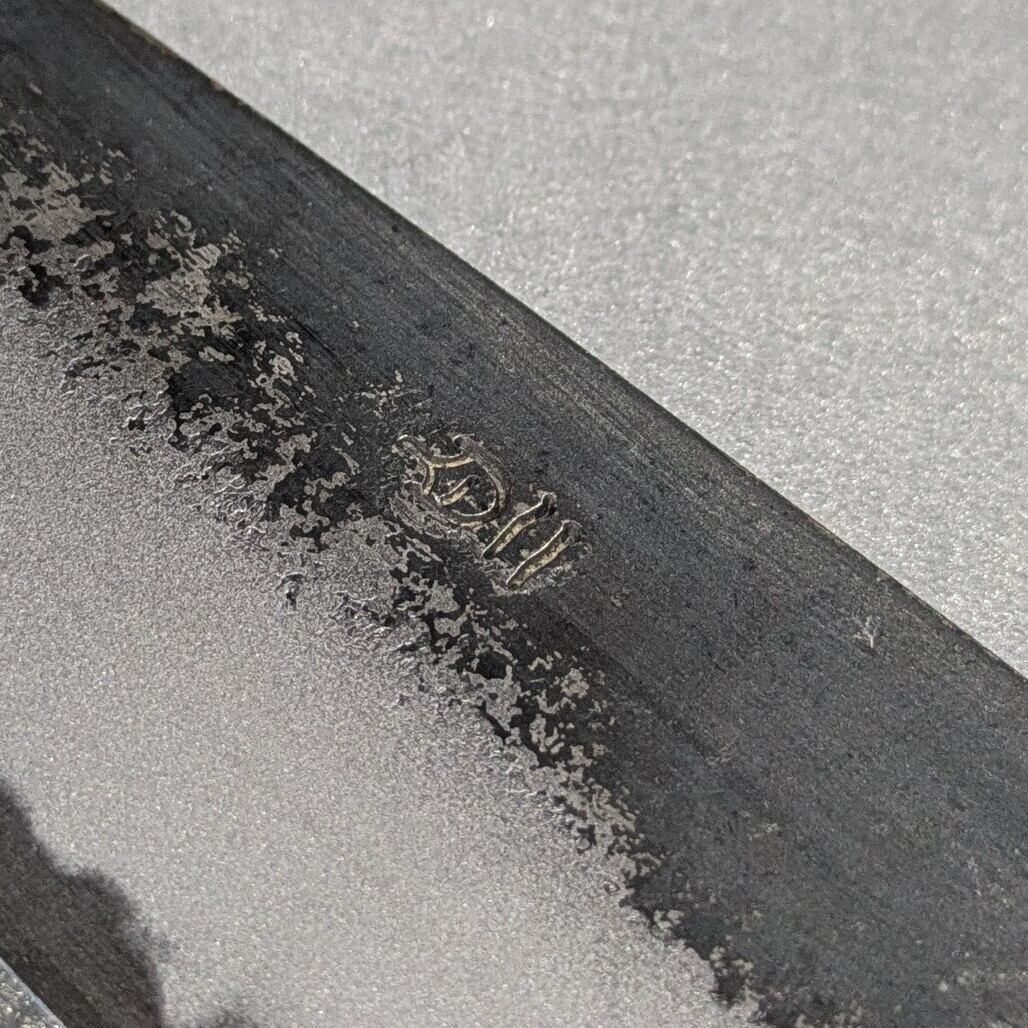
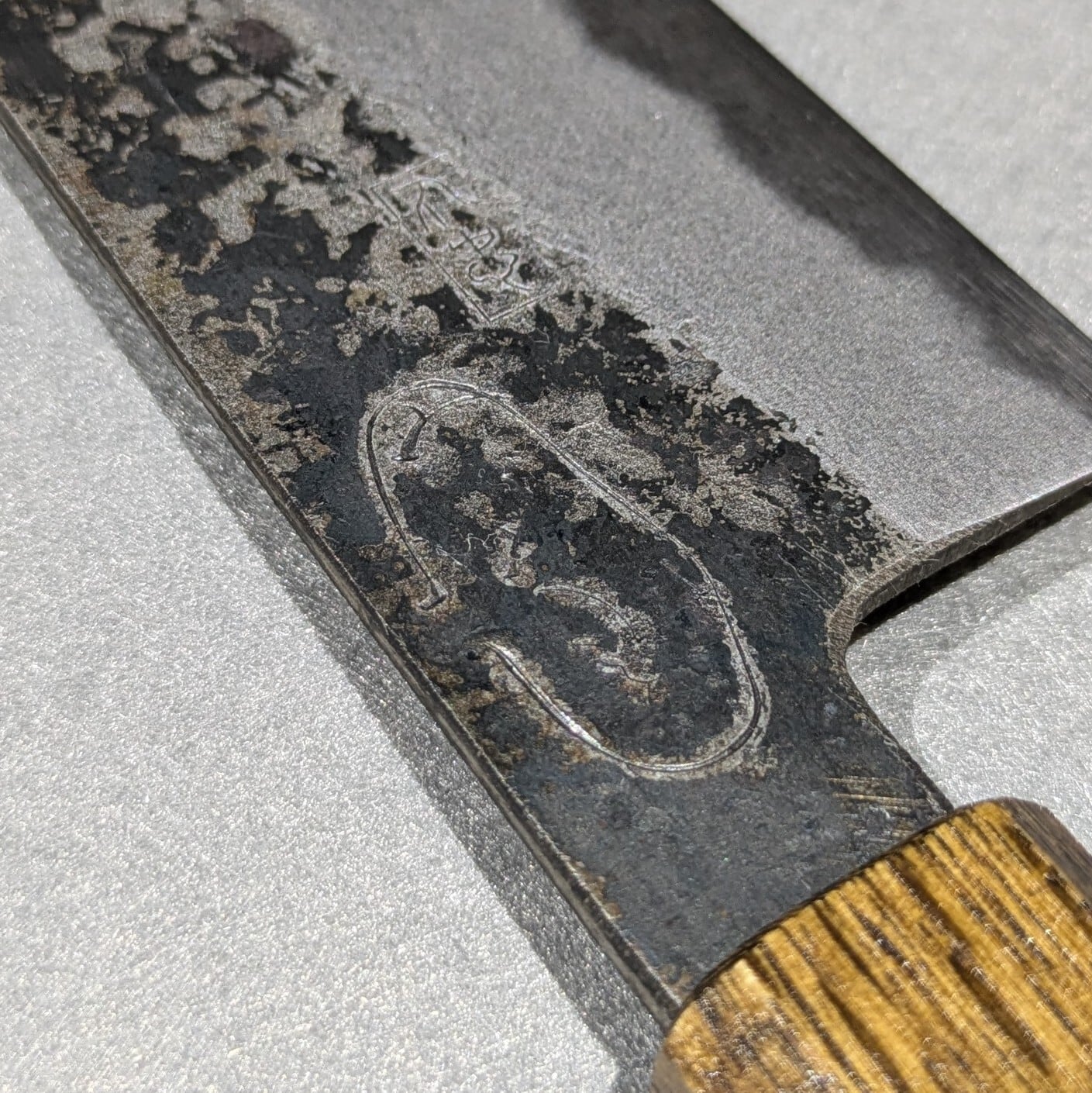
※「黒打」(くろうち)とは、鍛造や焼入れ時にできた黒い酸化膜をあえてそのまま残し、刃の部分だけを研磨して仕上げたものです。
黒い部分は酸化膜が鉄の表面をコーティングしているため、錆びにくくなっています。
●三徳(さんとく)とは、肉、魚、野菜の3種類の食材をこれ1本で対応できる日本生まれの万能包丁です。
日本の家庭では最も一般的に使われている包丁です。
●Blacksmith : Tanaka uchihamono works
●Steel : White Steel #2 (Carbon Steel)
One of Japan's traditional high-grade blade steels, it is a high-purity carbon steel.
This knife steel offers an excellent balance of sharpness and ease of sharpening, making it highly recommended for beginners.
Due to its tendency to rust, thorough maintenance is required after use, but with proper care, its sharp cutting edge will last a long time.
●Blade length : about 180mm(From the base to the tip)
●Handle : Oak(Domestic Japanese timber)
※Each knife is handcrafted by artisans, resulting in variations in the blade's pattern, waveform, and color, as well as the handle's color and pattern.
※It is easier to sharpen than stainless steel and retains its sharpness longer. However, it is prone to rust and discoloration.
Always keep it clean and wipe it with a dry cloth.
Since acids accelerate rusting, rinse your knife with water as soon as possible after cutting acidic foods, and wipe it completely dry.
If you use the knife frequently, there is no need to oil it.
※「黒打」(Kurouchi) refers to a technique where the black oxide film formed during forging or quenching is deliberately left intact, with only the cutting edge polished to completion.
The black portion is less prone to rusting because an oxide film coats the iron surface.
●三徳(Santoku) is a versatile Japanese-born knife capable of handling three types of ingredients—meat, fish, and vegetables—with just one blade.
This is the most commonly used kitchen knife in Japanese households.
★International shipping is handled by the shipping agency “want.jp”.
Inquiries from overseas customers are also handled by that agency.
For inquiries after purchase, we apologize for any inconvenience caused, but we kindly ask that you submit your inquiry using the form at the URL below:
URL: https://help.cross-cart.jp/hc/en-us
-
レビュー
(0)